
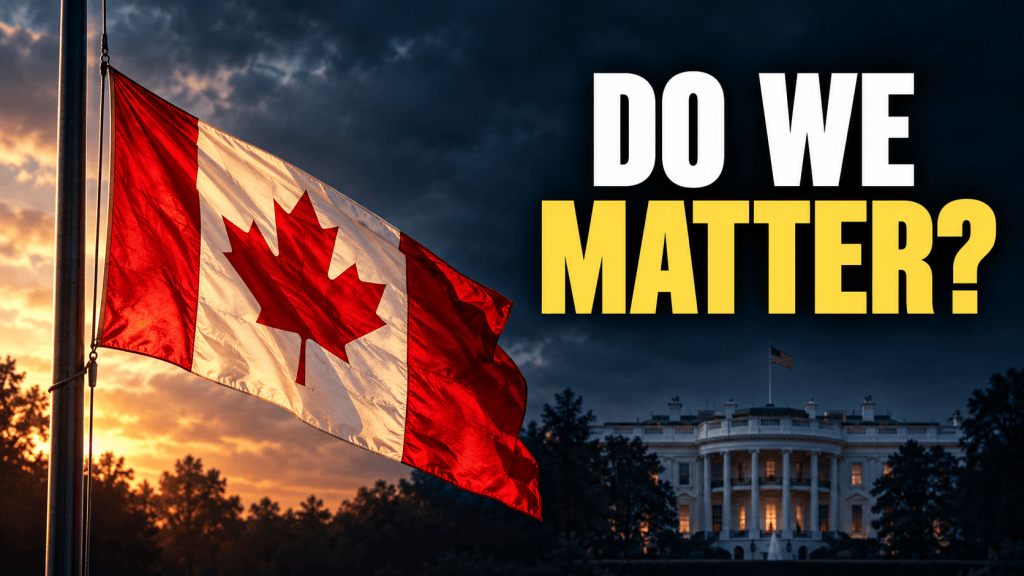
Does Canada Still Matter?
I read a commentary today about the tragedy at Canadian Forces Base Wainwright, and it touched a nerve. The writer was angry about the apparent absence of a public acknowledgment from the President of the United States. After everything that has happened between our countries during this administration, I understand that anger.
On October 17, a devastating fire swept through the training area at CFB Wainwright in Alberta. Prime Minister Mark Carney has confirmed that four Canadian service members died and dozens more were seriously wounded. Families are now facing a loss that no announcement or expression of sympathy can begin to repair. Other families are waiting beside hospital beds, hoping their loved ones recover.
Those people deserve to remain at the centre of this story. Their suffering matters far more than anything Donald Trump chooses to say.
Still, I find myself asking why a public acknowledgment from our closest neighbour should even be something we have to wonder about.
As I write this, I have been unable to find a public message of condolence from the president. This is a developing story, and a statement could follow. If one does, that should be acknowledged. For now, the apparent absence bothers me, particularly given the strain already placed on the Canada–United States relationship.
I’m certainly not looking for Canada to receive some grand gesture of sympathy. We can support our own people, and we will. I would simply expect the leader of a neighbouring country, one we have long considered a friend, to recognize that something terrible has happened here.
Surely that is a reasonable expectation.
What also caught my attention were the comments described beneath the original article. Some Americans apparently said they hadn’t even heard about the tragedy.
My first reaction was to wonder how something this serious could happen in Canada without registering with people just across the border. It adds to a feeling I have had for some time: we spend a considerable amount of our lives hearing about the United States, while Canada can seem almost invisible to Americans unless something here affects them directly.
There is a factual distinction worth making, though. American news organizations have reported on Wainwright. PBS carried coverage, as did American local television outlets. Saying their media completely ignored it would go beyond what the evidence supports.
That leaves me with a different question. How much attention does Canada receive, even when the reporting exists? Does a tragedy involving Canadian military personnel break through to an American audience, or does it disappear beneath the constant noise of American politics?
A few comments cannot answer that for an entire country. They certainly made me think about how uneven the attention between our countries can feel.
Here in Canada, American affairs are almost impossible to avoid. Decisions made in Washington can affect our livelihoods, so we have practical reasons to pay attention. Over time, though, that attention also becomes familiarity. We hear about American communities when disaster strikes, and we understand that ordinary people are suffering.
I would like to believe that concern travels both ways.
The United States is entitled to care about its own citizens. Every government has that responsibility. Its influence also reaches far beyond its borders, and with that influence comes a responsibility to recognize the people living on the receiving end of American decisions.
Canada has felt that particularly sharply during this administration. The relationship has become exhausting. There is an uncertainty now about what might be said or threatened next, and it has changed how many of us see a country we once regarded with much greater confidence.
Against that background, an apparent silence after a tragedy carries more weight than it otherwise might.
I cannot tell you what is in the president’s mind. I cannot claim that every American who missed this story is indifferent to Canadian lives. Someone who has never heard about a tragedy has not necessarily chosen to disregard it.
I can tell you how this feels from my side of the border.
It feels as though Canada is expected to pay close attention whenever the United States wants something from us, while we are left wondering whether our own experiences merit even a moment of attention in return.
That wears on a friendship.
We have Canadian military families grieving today. Whatever disagreements exist between Ottawa and Washington, those families have nothing to do with them. A message acknowledging their loss would require no negotiation and would concede nothing politically.
It would simply recognize that people who serve a neighbouring ally have suffered terribly.
If that acknowledgment comes, I will welcome it. I would also hope it reflects something that extends beyond a single statement: an understanding that Canada matters even when the subject has nothing to do with American demands.
I still want a healthy relationship with the United States. I suspect many Canadians do, despite how frustrated we have become. A lasting relationship needs some evidence of mutual regard, especially when one neighbour is having a terrible day.
Today, I find myself wondering how much of that regard remains.


Leave a Reply