
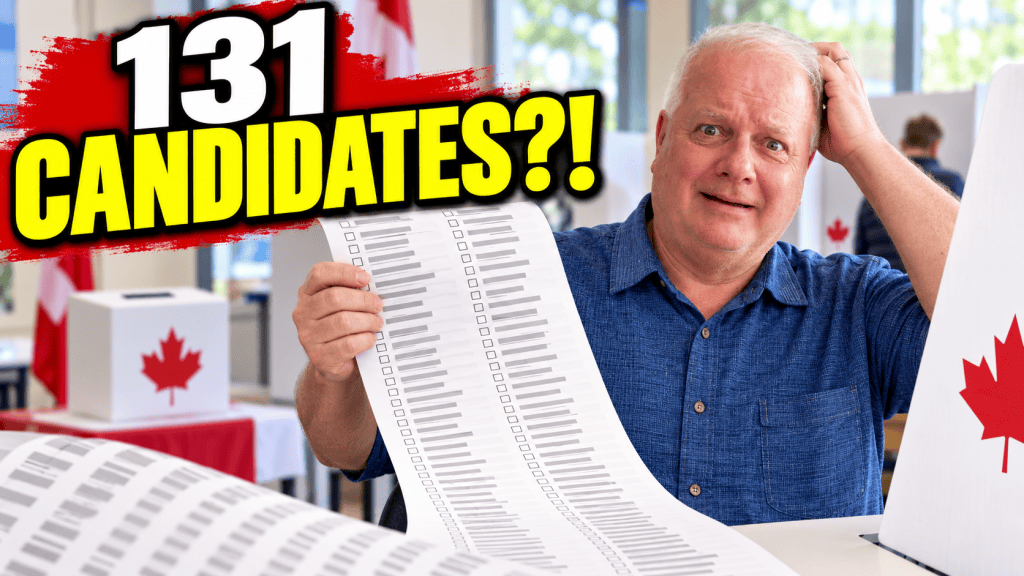
BALLOT OVERLOAD
I recently decided it was time to take a serious look at the candidates running in Vancouver’s municipal election this October. I wanted to do what responsible voters are always told to do. Learn about the candidates. Study their positions. Look at their experience. Decide who deserves my vote.
Then I opened the candidate list.
Eight people are running for mayor.
- Fifty-six are running for ten seats on Vancouver City Council.
- Thirty-five are running for seven seats on the Park Board.
- Another thirty-two are running for nine seats on the School Board.
Add them all together and Vancouver voters are being asked to choose from 131 candidates.
One hundred and thirty-one!
Then, just in case we still have some energy left, the ballot will also contain three Capital Plan questions and two plebiscite questions.
How in the bleep is an ordinary voter supposed to make an informed decision?
Seriously. Who has the time to investigate 131 people?
- Who are they?
- What have they done?
- What do they believe?
- Are they qualified?
- Do they understand the job?
- Are their promises realistic?
- Do they have a hidden political agenda?
Some of these people may be excellent candidates. Others may have no business holding public office.
How are we supposed to tell the difference?
Having many people willing to run is not a bad thing. Canadians have the right to seek public office, and we should never create an electoral system reserved for professional politicians, wealthy people or candidates approved by established political parties. The problem is not that 131 people are allowed to run. The problem is that Vancouver’s electoral system expects every voter to meaningfully evaluate all of them.
Think about what we are being asked to do.
We are electing one mayor, ten councilors, seven Park Board commissioners and nine School Board trustees.
That is up to 27 separate choices involving four different public bodies.
A voter could spend only five minutes researching each candidate and still need almost eleven hours to get through the entire list. Five minutes per person would barely be enough time to read a biography, let alone examine someone’s qualifications, positions, voting record or public statements.
Give every candidate a more reasonable fifteen minutes and the research would take nearly 33 hours.
That is almost a full working week just to prepare to vote. Most people are working, raising families, caring for relatives, paying bills and trying to get through their own lives. Expecting them to spend several days studying a municipal ballot is simply unrealistic.
Vancouver makes this especially difficult because we elect our councilors citywide. We do not have neighbourhood wards where a voter might examine four or five candidates competing to represent their part of the city. Someone living in Champlain Heights is expected to assess the same 56 council candidates as someone living in Kitsilano, the West End or downtown. Many of those candidates have never visited our neighbourhood. Most have never knocked on our door. Some may know very little about the concerns of the people who live here. Yet we are supposed to decide whether they should represent the entire city.
What happens when voters are confronted with a list this large?
Most of us look for shortcuts.
We recognize a familiar name.
We vote for the incumbents.
We choose the candidates belonging to one political party.
We remember someone whose sign we saw on a busy street.
We select the name that appeared most often in the news.
Perhaps we leave parts of the ballot blank because we simply do not know enough about the candidates. None of those choices necessarily tells us who would make the best councilor, Park Board commissioner or school trustee. This system naturally favours incumbents, established civic parties and candidates who can afford citywide advertising. It works against newcomers and independent candidates who may be highly qualified but do not have the money, organization or name recognition required to reach hundreds of thousands of voters. Ironically, giving us more choices may result in less thoughtful voting.
Technically, this is democracy. Qualified candidates can put their names forward. Eligible voters can receive a ballot. Votes are counted and the winners take office.
Democracy, however, is supposed to involve informed choice. If the ballot is so enormous that no reasonable person can properly investigate everyone on it, are we making an informed choice? Or are we mostly recognizing names, checking party labels and making educated guesses? A ballot should not feel like a final university examination for a course we never had time to take.
There are ways to improve this.
– Vancouver could be divided into neighbourhood wards, allowing residents to elect councilors who are directly accountable to their part of the city.
– A mixed system might be even better. Some councilors could represent individual neighbourhoods while others continue to be elected citywide.
That would preserve a citywide perspective while giving every community an identifiable representative. The city could also provide a proper, searchable voter guide. Every candidate could be asked the same questions about housing, taxes, public safety, transportation and city services. Their answers could appear together in one place, with reasonable word limits, allowing voters to make direct comparisons.
Candidate forums could be better organized and divided by office. One set for mayoral candidates, another for council, another for Park Board and another for School Board. We also need to ask whether electing all these positions on one massive ballot is the best way to run a city.
I will vote on October 17.
I will do my best to research the candidates, examine their records and make responsible choices.
Voters should certainly make an effort. We cannot complain about government and then refuse to participate in choosing it. The system also has a responsibility to us. I should not need to spend nearly a full working week investigating 131 people simply to exercise my democratic duty. A longer ballot does not automatically give us better democracy. Sometimes it gives us more confusion, more dependence on political parties and a greater advantage for the people whose names we already know.
The question is not whether Vancouver voters are intelligent enough to understand this election.
The question is whether the system gives us a realistic opportunity to make genuinely informed choices.
Looking at 131 candidates and five additional ballot questions, I am not convinced that it does.
What do you think?
Is Vancouver’s municipal ballot an impressive example of democratic choice?
Or has democracy become buried under too many names?
 North of Opinion with Doug Rogers
Leave a comment