
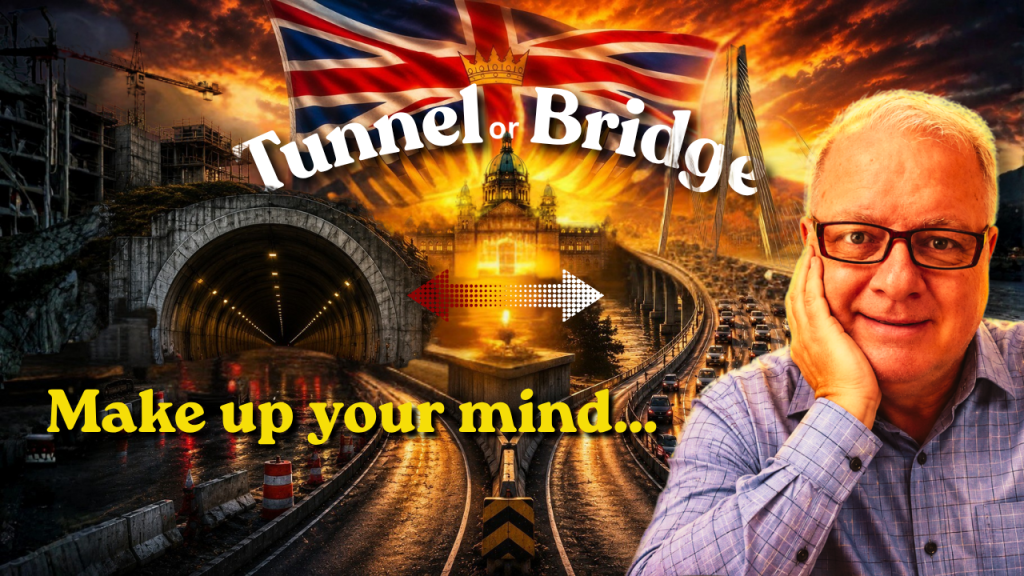
British Columbians were told that a decision was being carefully considered regarding the future of the crossing beneath the Fraser River. Studies were commissioned. Consultations were held. Engineers, planners, politicians, and community leaders weighed in. The debate went on and on over one central question: should we build a new tunnel or replace the aging crossing with a bridge?
Eventually, a decision was made. The tunnel option won out.
Whether you agreed with that choice or not, at least there was finally a direction. The expectation was that the debate was over and the work would begin. Taxpayer dollars had been spent. Time had been invested. The planning process had run its course.
Then came the latest announcement. The tunnel project has now been cancelled.
As a taxpayer, I find that frustrating.
The existing crossing remains a bottleneck for commuters, commercial traffic, emergency vehicles, and the communities that rely on it every day. Population growth has not stopped while governments have debated. The need for additional capacity has not disappeared. If anything, the urgency has only increased.
What troubles me most is not whether a tunnel or a bridge is the better option. Reasonable people can disagree on that. My concern is the amount of time, money, and effort that have been spent only to find ourselves back at the starting line.
At some point, someone needs to be accountable when major public projects consume years of planning and millions of dollars, only to be shelved before meaningful progress is achieved. Governments change. Priorities shift. That is part of democracy. What should not change is the expectation that public funds are managed responsibly and that decisions, once made, actually lead to action.
Personally, I have always preferred the bridge option. Had that route been chosen years ago, there is a good chance British Columbians might already be driving across it today. Instead, we continue to debate while costs rise, construction prices increase, and traffic congestion worsens.
The political reality is equally frustrating. Replacing one government with another is often presented as the solution. Yet many voters find themselves caught in the middle. Some are unhappy with the NDP’s handling of major infrastructure projects. Others are uncomfortable with the direction of today’s Conservative movement. Neither option feels like a perfect fit.
That leaves many of us asking the same question: how do we move this project forward?
The answer, in my view, begins with public pressure. Citizens need to keep demanding action, regardless of which party occupies the legislature. We need less political posturing and more shovels in the ground. Less revisiting old decisions and more commitment to completing essential infrastructure.
The Fraser River crossing is not a luxury project. It is a critical transportation link for the Lower Mainland and for the province’s economy. Every year of delay makes the solution more expensive and the problem more severe.
British Columbians have debated this issue long enough.
Tunnel or bridge, pick a direction and build it.
The time for studies, delays, cancellations, and second-guessing has long since passed. What we need now is action.


Leave a Reply