
I’ve been focused on my books for a while now, but I haven’t lost my drive and motivation to speak out about politics and against the authoritarianism regime developments in the U.S. Here’s my latest rant about Trumps ill health and his slow-diminishing hold onto power.
If you want to learn more about how the U.S. got there in the first place and how Canada has responded in the last few years – check out my book on Amazon.ca or Amazon.com: NORTH of OPINION – a Canadian’s Take on Democracy, Division and Defiance in a Changing World.
Watching events unfold south of the border, it is hard not to notice the growing concern around Donald Trump’s health and how that is beginning to affect his standing on the world stage. From my vantage point in Canada, this mix of physical decline, constant political posturing and diminished diplomacy paints a picture that feels more fragile than stable. The U.S. government is broken, that is alarmingly clear.
Trump has appeared at public events with visible bruises on his wrists and severe swelling on both ankles. I noticed that he couldn’t even walk in a straight line on the red carpet after exiting Airforce One the other day. The White House insists it is nothing more than aspirin side effects and vigorous handshakes. Medical speculation points to venous issues. Despite reassurances, the chatter does not go away. His stumbles on stage and difficulty completing thoughts have also raised flags among psychologists, some calling these “dead-ringer” signs of decline. At seventy-nine he is the oldest person to serve as president, and age itself remains a heavy factor in the public’s doubts about his stamina and sharpness.
Within his own circle, shifts are underway. JD Vance, the vice-president, has begun to speak more publicly about being ready if needed. Conservative strategists even describe the scene as a “MAGA Hunger Games,” with rivals circling and preparing for the possibility of a weakened leader. That alone signals uncertainty inside the administration.
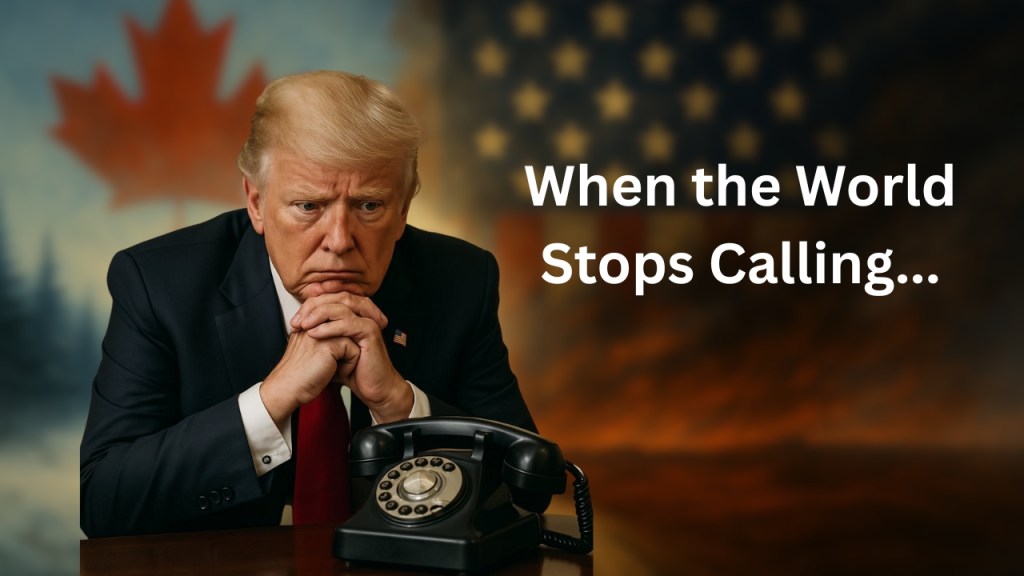
Diplomacy has shown its strain as well. Reports suggest leaders are increasingly reluctant to take his calls or attend meetings, preferring to keep their distance. This has been stated outright, and nations are now cancelling their meetings with Trump and refusing to return his phone calls. In February, Trump’s Oval Office clash with Ukrainian President Volodymyr Zelenskyy became a shouting match, embarrassing enough that European leaders reacted with open criticism. When a president cannot keep patience behind closed doors, respect abroad begins to thin. I mean, why would anyone meet with him or take his calls. No one, not even world leaders want to be humiliated and belittled on the world stage in the Oval Office. Trump just does not understand the value of relationships, diplomacy or respect.
The Alaska summit with Vladimir Putin in August deepened those concerns. Trump floated the idea that Ukraine might have to cede territory for peace, a stance that rattled NATO allies. French President Emmanuel Macron warned bluntly that if Putin avoids meeting Zelenskyy, it would prove Trump had been duped. These are not small remarks from world leaders. They mark a willingness to speak openly about doubts that were once whispered.
The White House continues to push back against the health rumors, often with irritation. Yet that defensiveness only fuels more speculation. The reality is that perception shapes power, and when the world begins to question a leader’s capacity, the diplomatic chill sets in quickly.
As a Canadian, I cannot ignore how close this all feels. Canada relies on a stable partner across the border. The idea of a president both struggling with health and promoting divisive rhetoric leaves us with uncertainty about what comes next. Diplomacy works best on trust and reliability. Right now both feel weaker.
Trump remains in office, holding events and insisting on his strength. Still the bruises, the stumbles, the rising speculation and the shifting alliances are impossible to ignore. The story is not yet about collapse. It is about a slow erosion of confidence both at home and abroad, and that carries consequences that will ripple well beyond Washington.
 dougrogers.ca
Leave a comment